From the IntroductionSeven minutes, or until the cat stirs
On the Erroneous Assumption That Cats Sleep
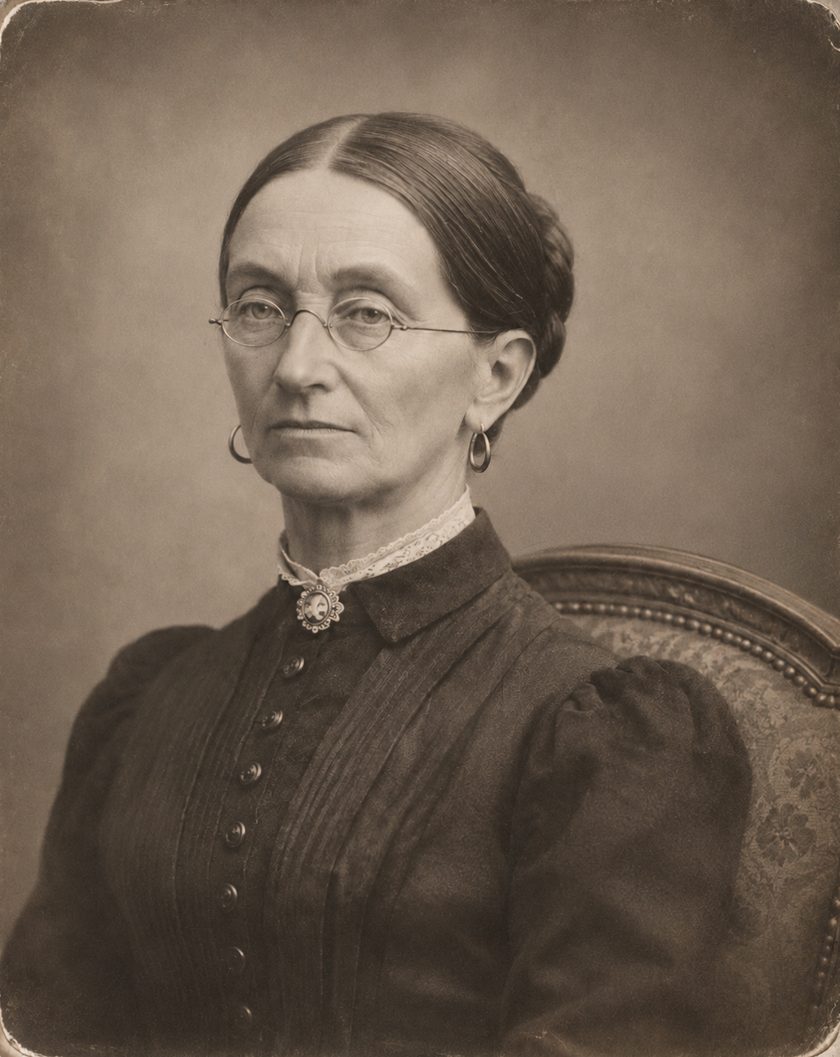
The theory of Dr. Professor M. Euphemia O. Winkless, set out by the Editor
For centuries, mankind has labored under the comfortable and entirely erroneous assumption that cats sleep.
It is an understandable mistake. The eyes are closed. The breathing is regular. The animal appears peaceful, innocent, and in some lights almost angelic.
Appearances can deceive. One night in the winter of 1887, Dr. Professor M. Euphemia O. Winkless, a scholar of sleep, was at work in her study, with her own cat, Sir Reginald, in the chair beside her. Her published work until then had concerned the dormouse, an honest sleeper. Sir Reginald had been motionless for nine hours. She had addressed him by name four times, from a distance of two feet, and he had exhibited all the characteristics of profound deafness.
Two floors below, behind three closed doors, the cook opened a tin of sardines.
Dr. Winkless turned her head and the chair was empty. She took the lamp and went down. Sir Reginald was sitting beside the tin, washing an ear. By her measurements he had covered sixty-one feet, two staircases, and the doors in considerably less time than is permitted by the laws of physics. The sardines were in olive oil.
“A creature that can hear a tin through three doors,” she wrote that night, “can hear its name from two feet. He had not been asleep at all. He had been declining to answer.”
She did not go to bed. After seven years of observation, fourteen broken flowerpots,* and the unexplained disappearance of a small but valuable cheese, she arrived at a conclusion that would have shaken the foundations of feline science, had there been any.
Cats were not sleeping. They were thinking. And, more alarmingly, they were thinking about us.
* Thirteen. The other was the wind. Ed.
The Feline Day
The arithmetic is not difficult, and it is curious that nobody had done it. A healthy cat lies still for some twenty hours in the day. Dr. Winkless asked what it did with the remaining four, and kept a record.
In the first week of March 1889, Sir Reginald was in motion for twenty-seven hours and fifty minutes. In that time he removed a fern from its sill, a pen from its stand, the stand from the desk, and a visiting uncle from the good armchair. He opened the larder, by what means is not known. He was let out nine times and let in ten. He never once entered a room to see what was in it. He went in, did what he had come for, and returned to the chair.
“Nobody works at that rate without preparation,” wrote Dr. Winkless. “I have met generals who could not have got the fern. Five hours of scheming to every hour in the field may seem a great deal, but one notices that they are very seldom caught.”
The Three Conditions
She named this motionless state Feline Strategic Repose. The Catological Society preferred a fuller term, Covert Activity and Tactical Nibble-Acquisition Planning, and used it in correspondence for some months, until a member wrote the initials on the board.
In ordinary Repose the work is routine: who is at home, which door, what became of the chicken. From time to time, however, the cat passes into the advanced condition known as Rapid Evil Machination. The whiskers twitch. The paws begin to row. A plan is being rehearsed, and if all four feet are going, the reader is advised to take down anything on the mantel that has been in the family.
The third condition, Genuine Feline Slumber, in which the cat is neither committing an offense nor considering one, she at first believed to be purely theoretical.
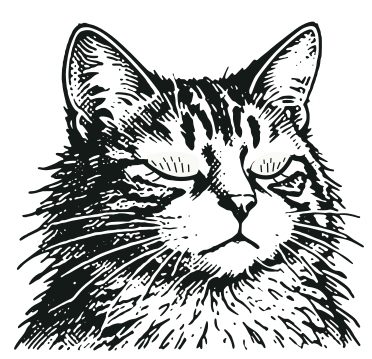 Feline Strategic ReposeRapid Evil MachinationGenuine Feline Slumber
Much that had puzzled householders for generations was now explained. This is why a cat lies down upon the letter you are writing: correspondence is inspected at the desk. This is why it gazes for ten minutes at an empty corner of the ceiling. It is going over the minutes of the last meeting. When it looks at you from across the room and slowly closes both eyes, it has been asked to approve something, and has approved it. When it gallops the length of the house and back at three in the morning, an idea has come to it that must be tried while the hall is clear. And when it has fallen off a thing in plain view, it sits down at once and washes, so that the record may be corrected.
This is also why, when you are ill, it comes and lies against you all night, and cannot be moved. Under Cause, Dr. Winkless has left a space.
The Night of the Drains
The cure was found by accident. On the evening of March 3, 1894, having a cold, Dr. Winkless read aloud to herself the Annual Report of the Borough Committee on Drains, which a cousin had written and wished admired. At page nineteen, Sir Reginald fell off the piano.
Dr. Winkless had seen cats fall before. In every recorded case the animal had washed. Sir Reginald lay on the carpet where he had landed, with his mouth a little open, and snored.
She read to him as far as page two hundred and six. In the morning, for the first time in seven years, every flowerpot in the house was on its sill.
She sent to her cousin for the Report of the year before. She borrowed other people’s cats, eight in all, and read to them from a railway timetable, the rules of whist, and the opening chapters of a novel that everybody admired. The timetable did well with older cats. The novel failed. A cat will not sleep while something is about to happen without it, nor will it sit still for long when nothing is. What was wanted was a tale in which something was always going to happen presently. She sat down and composed thirty.
The Slipper
There followed nine days of peace. The fern put out a leaf. The cook was heard to sing. Dr. Winkless, much encouraged, went from one tale a night to two, and then to four.
On the tenth morning she came down to breakfast and found Sir Reginald waiting for her at the foot of the stairs. He had a slipper in his mouth. He set it down in front of her, and looked up, and the notebook is hardly legible at this point, but it appears that he was pleased to see her.
“It was quite warm,” she wrote. “He had carried it down two floors. I have never been so frightened in my life.”
The condition is now called Canine Behavioral Regression. She cut the dose to a single tale and left the butter uncovered, and by Thursday the fern was on the floor. She stepped over it, she tells us, with a light heart. A certain amount of wickedness, she concluded, is necessary to the working of a cat, and the reader who finds the patient becoming obliging should put this book away for a week and buy a vase.
The Reception of the Work
The findings were laid before the Society in 1896. Professor Archibald Hound, the authority on dogs, inquired why, if cats were so clever, they did not simply ask for things. Dr. Winkless replied in a letter of forty pages. Professor Hound answered by return of post, with great enthusiasm, having not yet read it.
She received the Golden Sardine, the only medal ever struck in the field, on six occasions. It has been said against her that she founded the award, paid for the medal, and was the committee. It is only just to add that in 1893 it went to her old teacher, Professor Cornelius Whiskerford, who was unable to get up and receive it, a cat having fallen asleep on him in 1871.
In the spring of 1897 the complete manuscript of the present work fell from the edge of her desk into the study fire. There were no witnesses. The text that follows has been put together from her notebooks, from her letters, and from a second copy, which had been sat upon for a number of years and is in excellent condition. The page on which she names the party responsible for the fire has not been found.
On the Use of This Book
The thirty tales make up one month’s dosage. One is to be taken each evening, seated, with the patient in the lap. On the thirty-first, where there is one, rest. The patient will not.
Read slowly, in a low voice, and do not hurry the end. You will be told when to stop and inspect the patient. The Editor is often asked whether it is necessary to scratch behind the ears while reading. Dr. Winkless does not require it. The Editor sees no harm.
One matter remains. On June 14, 1894, Dr. Winkless brought her readings to Sir Reginald to a close. “Results complete,” the notebook says. “Subject fully understood. No further readings required.” The line is ruled beneath in red.
Under the red line there is an entry for the following evening. It gives the date, the title of a tale, and the hour at which the lamp was put out. There is one for the evening after that. They go on in order, from the first tale to the thirtieth and around again, through the rest of that notebook and eleven others, and there are four thousand and seventeen of them. The column headed Result is empty all the way down.
The Editor
Thirty tales follow. They are expected in 2027.
Return to the front door